Locations
Madison, WI

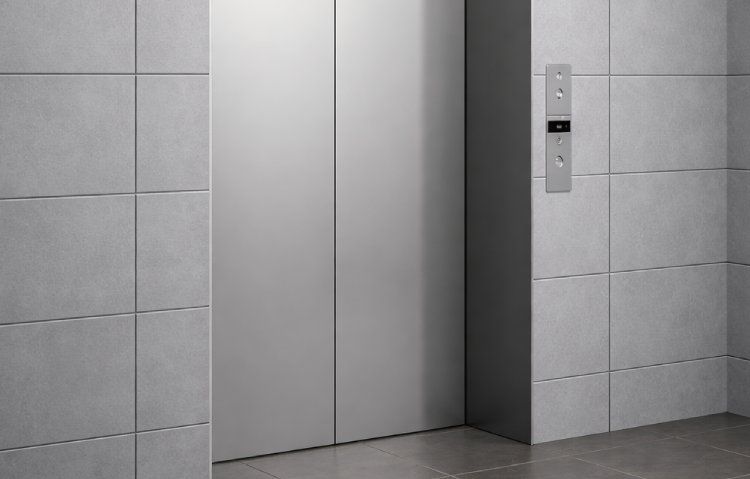

Whether you are a business owner, architect, or project manager, we are here to assist you. Elevate your inquiry by filling out the form below. Provide us with some initial details about your project, and we'll get back to you promptly with a customized elevator solution.
Elevator Consulting Services in Madison, WI: Performance, Compliance, and Asset Optimization for Modern Buildings
Elevator systems in Madison, WI, are essential for daily operations across healthcare campuses, government buildings and the University of Wisconsin–Madison. When vertical transportation systems fail to perform adequately, it affects tenants, compliance records and the long-term value of assets. Our elevator consulting services are designed to close the gap between where a system currently operates and where it needs to perform—covering safety compliance, modernization planning, maintenance strategy and engineering evaluations.
We work as an independent vertical transportation consultancy, which means our recommendations are based on technical analysis rather than equipment sales or service contracts. Our elevator consultants apply ASME A17.1 standards and industry best practices to every evaluation, whether it's a commercial building or an industrial facility.
Professional
elevator consulting services in Madison, WI address compliance requirements, system evaluations, predictive maintenance strategies, and capital planning—along with clear answers to the most common questions from building owners and property managers.
Industrial Elevator Consulting Services in Madison, WI for Safety and Operational Continuity
Industrial facilities across Madison depend on reliable elevator systems to sustain production, logistics and material handling. Our consulting services focus on safety, uptime and performance optimization through engineering analysis and lifecycle strategy.
Industrial System Evaluation and Risk Analysis in Madison, WI
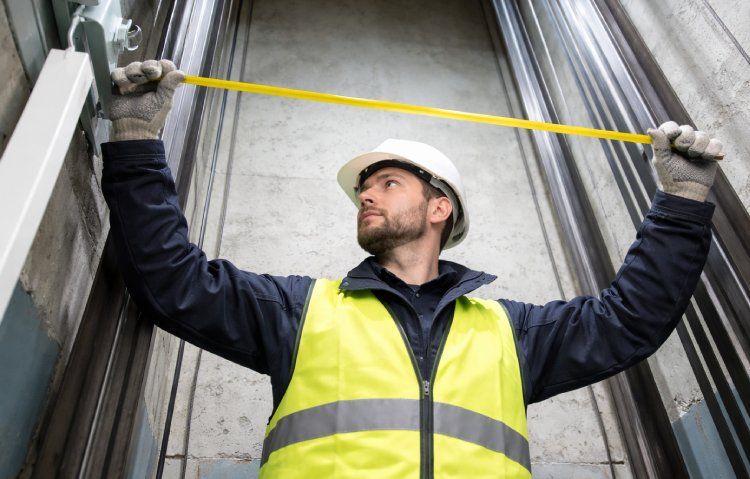
We conduct comprehensive elevator system evaluations to identify performance gaps, mechanical wear and system inefficiencies impacting industrial operations. Our assessments provide actionable insights that eliminate risk and improve reliability.
- Load capacity verification for operational demands
- Hoistway, shaft and machine room inspection
- Control system diagnostics and response analysis
- Electrical performance and energy benchmarking
- Structural integrity and component wear evaluation
We turn complex engineering data into clear recommendations that help increase uptime and lower unexpected failures.
Elevator Safety Compliance Consulting for Industrial Facilities
Industrial workplaces must follow safety rules and operational standards. We provide consulting services to help you comply with OSHA guidelines and national elevator codes.
- Emergency operation and backup system verification
- Brake system and traction safety testing
- Door interlock and safety circuit validation
- Alarm systems and communication compliance
- Risk mitigation aligned with industrial safety protocols
We fix compliance issues before they lead to violations. This helps ensure safer operations and makes inspections easier.
CALL US TODAY
224-500-0321
Elevator Maintenance Consulting Madison WI for Predictive Performance
Reactive maintenance causes downtime. Our consulting moves facilities towards predictive maintenance models that enhance reliability and lower repair costs over time.
- Maintenance contract performance evaluation
- Predictive maintenance strategy implementation
- Failure trend analysis and preventive planning
- Spare parts lifecycle optimization
- Service interval calibration based on usage patterns
This approach changes elevator systems from being unreliable and costly to becoming stable and effective assets.
CALL US TODAY
224-500-0321
Commercial Elevator Consulting Madison WI for Building Efficiency and Tenant Satisfaction
Commercial buildings across Madison require efficient vertical transportation systems to maintain tenant satisfaction, operational flow and property value. Our consulting focuses on performance optimization, modernization planning and system intelligence.
Elevator Performance Audit Madison WI for Efficiency Optimization
We perform thorough performance audits to assess system responsiveness, ride quality and energy efficiency. Our analysis highlights inefficiencies that affect tenant experience and operational flow.
- Wait time and dispatch efficiency analysis
- Floor leveling accuracy and ride smoothness
- Motor and drive performance optimization
- Traffic flow and peak hour demand analysis
- Energy consumption benchmarking and reduction strategies
Our goal is simple—move people faster, safer and with greater efficiency.
Vertical Transportation Consulting Madison WI for Smart Building Flow
We optimize the entire vertical transportation system—not just individual elevators—to deliver efficient, reliable movement across the entire building.
- Elevator bank configuration optimization
- Intelligent dispatch system analysis
- Passenger flow distribution strategies
- Peak traffic management solutions
- Integration with smart building technologies
We convert elevator systems into valuable assets that improve building performance and enhance user experience.
Frequently Asked Questions
Independent elevator consulting covers a range of technical and strategic decisions—from ASME A17.1 compliance and modernization planning to predictive maintenance and traffic analysis—that directly affect system safety, reliability and cost efficiency.
What does an independent elevator consultant do to improve elevator performance and reliability?
An independent elevator consultant provides technical analysis that is not influenced by service contractor interests. We evaluate mechanical condition, control systems, door performance, and electrical integrity to identify specific failure points and inefficiencies.
We also review maintenance records and service logs to identify recurring failure patterns. This allows us to recommend targeted interventions rather than broad, costly repairs.
Our role includes verifying that maintenance contractors are delivering contracted services at the required quality and frequency. Building owners often discover gaps in service delivery they were previously unaware of.
When should a building owner bring in an elevator consultant instead of relying only on the service contractor?
Service contractors have a financial interest in recommending repairs and modernizations. We bring independent verification to those recommendations—confirming whether they are technically necessary before capital is committed.
Key situations that warrant independent consulting include:
- Repeated elevator outages or unresolved performance issues
- Pending modernization proposals from a service contractor
- Lease renewals or property acquisitions requiring system condition assessments
- Failed inspections or outstanding code violations
- Budget planning for capital improvements over a 5–10 year horizon
Relying solely on a service contractor for both execution and evaluation creates a conflict of interest. Independent consulting separates those roles.
What is typically included in an elevator modernization assessment and upgrade roadmap?
A modernization assessment begins with a full condition evaluation of the existing system—controller, drive, hoist machine, cab, doors and safety components. We document the age, condition and remaining useful life of each major component.
From that baseline, we develop a prioritized upgrade roadmap. This identifies which components require immediate replacement, which can be deferred and which upgrades will deliver measurable improvements in reliability or energy efficiency.
The roadmap also includes:
- Estimated costs for each upgrade phase
- Compliance gaps that modernization must address
- Performance benchmarks the upgraded system should meet
- Procurement specifications to ensure competitive bidding
This process prevents over-scoping and ensures that modernization investment targets the right systems at the right time.
How is elevator code compliance evaluated against ASME A17.1 and applicable Wisconsin requirements?
The ASME A17.1 is the national safety code for elevator design, installation and maintenance in the U.S. In Wisconsin, the Department of Safety and Professional Services enforces regulations that align with this code.
We evaluate compliance by conducting a detailed inspection against current code requirements and comparing findings against the applicable edition of ASME A17.1 adopted by the state. This includes safety devices, door interlocks, emergency lighting, firefighter service and communication systems.
We also assess whether any grandfathered conditions create liability exposure. Older installations may be legally compliant but fall below current safety standards—a distinction that matters in liability and insurance contexts.
How can a predictive maintenance strategy reduce elevator downtime and long-term repair costs?
Reactive maintenance addresses failures after they occur. Predictive maintenance uses usage data, component wear trends, and inspection findings to intervene before failures happen—reducing unplanned outages significantly.
We establish maintenance baselines by analyzing current service intervals, component wear rates and historical failure data. From that analysis, we calibrate service intervals and identify components approaching end of useful life before they fail in service.
The financial impact is clear. Regularly replacing worn brake linings as part of a maintenance schedule is much cheaper than dealing with emergency repairs, including fast parts shipping and downtime for building operations. Over 5 to 10 years, using a predictive maintenance program consistently reduces overall maintenance costs compared to waiting for issues to happen.
What is the "3–4 rule" for elevators, and how is it used in traffic planning or modernization decisions?
The 3–4 rule is a practical threshold used in elevator traffic analysis. It states that no more than 3–4 minutes should elapse between elevator arrivals at a given floor during peak demand periods and that a building's elevator system should move approximately 12–15% of the building population within a 5-minute window during peak traffic.
When a system does not meet this standard, passengers have to wait longer, which affects tenant satisfaction and how well the building operates. We use this benchmark to check if the number of elevators, their capacity and the way they are dispatched are suitable for the number of people using the building.
In modernization planning, the 3–4 rule informs decisions about destination dispatch systems, cab sizing and control upgrades. A building that consistently misses this threshold during peak hours may not need new elevators—it may need smarter dispatching and control logic applied to existing equipment.
Speak With an Elevator Consulting Expert
Elevator systems should operate with precision, safety and efficiency—not uncertainty. In a growing city like Madison, Wisconsin, reliable vertical transportation is essential to sustaining building performance and occupant satisfaction.
Our elevator consulting services deliver clarity where complexity exists—helping you reduce downtime, ensure compliance and maximize asset value through expert engineering insight.