Elevator Lifecycle Cost Analysis: Strategic Planning for Industrial Operations and Long-Term Asset Management
Elevator systems represent significant long-term investments that directly impact building operations, tenant satisfaction and property values for decades. Many building owners manage their elevators only when problems arise, such as breakdowns or maintenance needs. This method is not the best way to manage these assets. By learning about elevator lifecycle cost analysis, owners can turn unexpected repair costs into a planned budget. This helps them increase their returns on investment and ensures the elevators run reliably.
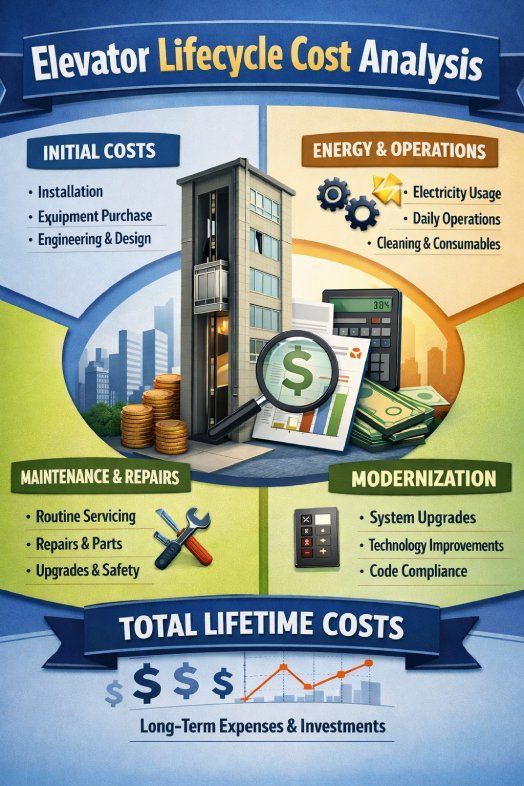
We examine elevator lifecycle costs by looking at all ownership expenses from installation to retirement. These expenses include maintenance contracts, compliance requirements, modernization projects and future replacement needs. This thorough approach helps property managers budget accurately for large expenses, reduce risks in operations and extend the lifespan of the elevators. Effective lifecycle planning considers usage intensity, component wear patterns and regulatory changes that influence long-term performance.
Our elevator lifecycle consulting combines engineering analytics with financial modeling to deliver data-driven recommendations for maintenance optimization, modernization timing, and capital expenditure planning. Rather than relying on generic maintenance contracts or emergency repairs, we help facility teams develop customized strategies that align vertical transportation performance with operational goals and budget constraints.
Industrial Elevator Lifecycle Cost Analysis for Operational Reliability and Financial Performance
Industrial environments need reliable equipment that works all the time and has clear costs. To achieve this, lifecycle cost analysis looks at operating costs, performance risks and how long equipment lasts. This helps facility leaders connect elevator performance with productivity, safety needs and long-term planning.
Industrial Lifecycle Cost Strategy and Performance Optimization
Industrial elevators work in tough environments to move materials, machinery, and people in manufacturing plants and logistics centers. If you don’t plan for their lifecycle, maintenance costs will increase, and downtime may disrupt operations. Our lifecycle evaluation analyzes performance data, usage intensity and component wear patterns to establish optimized maintenance and replacement schedules.
We look at the whole operational lifecycle to find ways to lower costs and increase efficiency. Predictive modeling improves production reliability. It helps organizations manage their assets better. This prevents unexpected failures and increases the lifespan of systems.
Key lifecycle optimization elements include
- Preventive maintenance cost forecasting
- Equipment reliability benchmarking
- Downtime risk mitigation analysis
- Component lifecycle tracking
- Operational efficiency improvements
- Safety compliance verification
Take control of industrial elevator costs with engineering-driven lifecycle planning designed for measurable operational outcomes.
Elevator Maintenance Cost Analysis and Predictive Budget Planning
Maintenance expenses represent the largest portion of elevator lifecycle costs. Industrial systems running continuously require predictive analysis to prevent costly failures. Our maintenance cost evaluation reviews historical repair data, service intervals and replacement cycles to forecast future expenditures accurately.
Instead of using standard maintenance contracts, we create custom maintenance plans that match our operational needs and the condition of the equipment. Facility managers can see service costs clearly. This allows them to make better budgeting choices while ensuring they follow rules and keep safety standards high.
Benefits of maintenance lifecycle analysis include
- Reduced emergency repair expenses
- Optimized service contract negotiations
- Predictive replacement scheduling
- Extended equipment lifespan
- Improved operational reliability
- Budget certainty and planning accuracy
Request a lifecycle maintenance analysis to eliminate financial surprises and strengthen operational resilience.
Energy and Operating Cost Analysis for Industrial Elevator Systems
Energy use has a big effect on costs over time, especially in buildings that run elevators 24/7. Our energy cost analysis evaluates electricity usage, drive efficiency and system performance to identify modernization opportunities that reduce operating expenditures.
We check how efficient motors are, look at regenerative drive technology, and analyze usage patterns to find ways to save energy. Switching to sustainable options can lower utility costs and support ESG goals.
Energy optimization strategies include
- Annual energy consumption audits
- Peak load performance analysis
- Regenerative drive feasibility studies
- Operating efficiency benchmarking
- Sustainability performance metrics
- Long-term energy savings projections
Improve your efficiency and lower costs with energy optimization solutions based on data.
Commercial and High-Rise Elevator Lifecycle Cost Consulting for Asset Value Protection
Commercial properties need elevators that improve tenant satisfaction, increase property value and enhance efficiency. Lifecycle consulting offers insights that help owners balance investments in upgrades, manage budgets and ensure long-term performance of their infrastructure.
Total Cost of Ownership and Modernization ROI Analysis
When analyzing the lifecycle of a commercial elevator, it’s important to consider more than just the purchase price. Our assessment of total ownership costs includes installation, maintenance, energy use, modernization timelines and the value of the elevator when it's no longer in use. This complete financial model helps owners confidently justify their investments.
ROI studies for modernization assess different upgrade options by looking at payback periods and operational improvements. Understanding lifecycle economics helps property owners avoid replacing equipment too early and also reduces the risk of expensive maintenance issues later on.
Key ownership insights include
- Capital expenditure justification models
- Payback period calculations
- Tenant satisfaction impact analysis
- Maintenance cost reduction forecasting
- Asset valuation improvements
- Modernization timing strategies
Upgrade your building wisely and keep its value through clear lifecycle consulting.
High-Rise Lifecycle Planning, Capacity Modeling and Replacement Decisions
High-rise buildings can create complex traffic patterns, especially during busy times. This makes it important to coordinate several elevators. Lifecycle modeling helps us understand how many people the system can handle, how well passengers move, and how the parts of the system wear out over time. This information is useful for planning upgrades and modernization.
Our consultants analyze whether to replace or modernize equipment based on how much useful life is left, how well it operates, and how much it will save in the long run. We use data to make recommendations that remove guesswork and ensure your investments meet your performance goals.
Lifecycle planning advantages include
- Peak traffic demand simulations
- Elevator group control analysis
- Remaining useful life assessments
- Replacement versus modernization comparisons
- Long-term maintenance savings evaluation
- Performance optimization planning
Work with independent consultants to make sure high-rise elevator decisions improve performance and increase financial returns.
Frequently Asked Questions
Elevator lifecycle cost analysis raises specific questions about implementation timelines, financial benefits and strategic decision-making processes. These inquiries focus on practical applications, measurement intervals and the value of independent consulting expertise.
What are the key benefits of conducting an elevator lifecycle cost analysis?
Lifecycle cost analysis helps shift maintenance from a reactive approach to a strategic way of managing assets. We identify what drives costs throughout the life of equipment. This allows property owners to accurately predict major expenses, such as renovations and the replacement of parts.
The analysis reveals hidden operational issues and shows how much money preventive maintenance can save. Building owners can see all costs associated with ownership, including energy use, compliance with regulations, and the risk of downtime that can affect tenant satisfaction.
Organizations can benefit financially by lowering emergency repair costs, improving maintenance contract negotiations, and making capital planning more accurate. We help organizations avoid unexpected budget issues by creating clear cost models that match their operational needs and performance goals.
How often should an elevator lifecycle cost evaluation be performed in commercial or industrial buildings?
Commercial buildings should have lifecycle evaluations every three to five years. This timing matches regular capital planning and major maintenance schedules. Industrial facilities need these evaluations more often, usually every two to three years, because they have heavy usage and operate in tough conditions.
We recommend immediate evaluations when equipment reaches 15-20 years of service life, regardless of building type. This timeline coincides with increased component failure rates and modernization decision points that significantly impact future costs.
Events like ownership changes, major repairs costing over $10,000, or updates to regulations need a fresh look at lifecycle assessments. These assessments help make sure that cost estimates match the current condition of the equipment and the needs of operations.
Can an elevator lifecycle cost analysis assist in achieving sustainability and ESG targets?
Lifecycle analysis helps support environmental sustainability by improving energy efficiency and reducing waste. We measure how much energy is used and find ways to upgrade systems that lower carbon footprints and cut operational costs.
This analysis looks at schedules for replacing components to reduce waste and extend the life of assets through smart maintenance choices. Predictive maintenance helps avoid unnecessary part replacements and lessens the environmental impact from throwing away equipment too early.
ESG reporting is improved through clear lifecycle planning that shows responsible management of assets and commitments to long-term sustainability. We provide clear metrics for reducing energy use, minimizing waste, and improving operational efficiency, all of which support corporate sustainability goals.
What are the main differences in lifecycle cost analysis for industrial versus commercial elevator systems?
Industrial elevator analysis focuses on production continuity, material handling capacity and harsh environmental conditions that accelerate component wear. We evaluate specialized components like heavy-duty motors, reinforced platforms and industrial-grade control systems that differ significantly from commercial applications.
Commercial analysis emphasizes passenger experience, energy efficiency and aesthetic considerations alongside operational costs. Maintenance schedules usually follow set time frames. However, industrial systems need customized plans that take into account how much they are used and the surrounding environment.
Cost structures differ greatly between applications. Industrial systems typically have higher maintenance costs, but they often show better productivity, which can justify these expenses. On the other hand, commercial systems aim to balance operational costs with tenant satisfaction and property value.
How does a modernization return on investment (ROI) analysis inform decisions on upgrading or replacing elevator systems?
ROI analysis compares modernization costs against projected savings from improved reliability, reduced maintenance expenses, and enhanced energy efficiency. We calculate payback periods by quantifying operational improvements, including decreased downtime costs and lower service contract expenses.
This analysis looks at whether to upgrade individual components or replace the entire system. It identifies the best investment strategies to get the most financial return. Key factors include how much useful life is left, how well new parts will work with the current setup, and whether they meet regulatory requirements that affect the modernization process.
We explore different investment options to find cost-effective ways to upgrade our systems while staying within budget. This strategy helps us avoid spending too much on old systems and ensures they perform well for their intended lifespan.
Why is it advantageous to work with independent consultants for elevator lifecycle cost analysis?
Independent consultants provide unbiased evaluations without conflicts of interest that could affect equipment manufacturers or service providers. We focus on your financial interests and operational needs instead of promoting specific products or services.
Our expertise spans multiple elevator brands, technologies and applications, enabling comprehensive cost comparisons and performance benchmarking. This broad perspective identifies opportunities that single-vendor relationships might overlook due to limited product portfolios or service capabilities.
Independent analysis includes competitive market evaluation for maintenance contracts, modernization projects and component sourcing that reduces long-term costs. We negotiate from positions of technical knowledge and market awareness that benefit our clients' financial outcomes.
Take the Next Step Toward Smarter Elevator Investment
Elevators are essential for safety, efficiency, and financial performance. Don’t let failures determine your budget. Request a detailed analysis of lifecycle costs today to improve your understanding and confidence in your elevator choices.
Schedule your elevator lifecycle cost consultation now and ensure your vertical transportation systems remain safe, efficient and financially optimized for decades to come.
Ready to work with Mountain Cross Consulting?
Let's connect! We’re here to help.
Send us a message and we’ll be in touch.
Or give us a call today at 224-500-0321
Agency Contact Form
More Marketing Tips, Tricks & Tools
Blog